



A practical guide for freelancers, gig workers, creators, and anyone earning income on the side.

If you made extra money this year from freelancing, selling online, driving for a delivery app, or running a small side business, taxes may feel more confusing than usual.
A lot of people assume side income is too small to matter or that it only counts if they get a tax form in the mail. That is where many first-time freelancers and gig workers get caught off guard.
The truth is simpler than it sounds: if you earned money from a side hustle, there is a good chance you need to report it. The good news is that side hustle taxes do not have to be overwhelming. Once you understand the basics, the whole process becomes easier to manage.
| Quick Takeaways
• A 1099-K reports payment activity, but taxable income can still exist even if no form arrives. • Common deductions include software, mileage, office supplies, phone or internet use, and certain home office costs. • Estimated tax payments matter because side-hustle income usually has no withholding built in. • Good recordkeeping prevents most tax-season stress. |
What Is a 1099-K?
A 1099-K is a tax form used to report payments processed through third-party networks and online platforms. People often see it after selling online, doing gig work, or receiving payments through certain apps tied to business activity.
This form creates a lot of confusion because many people assume it is the only thing that determines whether income is taxable. It is not. The IRS cares about the income itself, not just whether a form landed in your inbox.
So even if you do not receive a 1099-K, you may still need to report income from freelancing, consulting, tutoring, content creation, delivery work, or online sales made for profit.
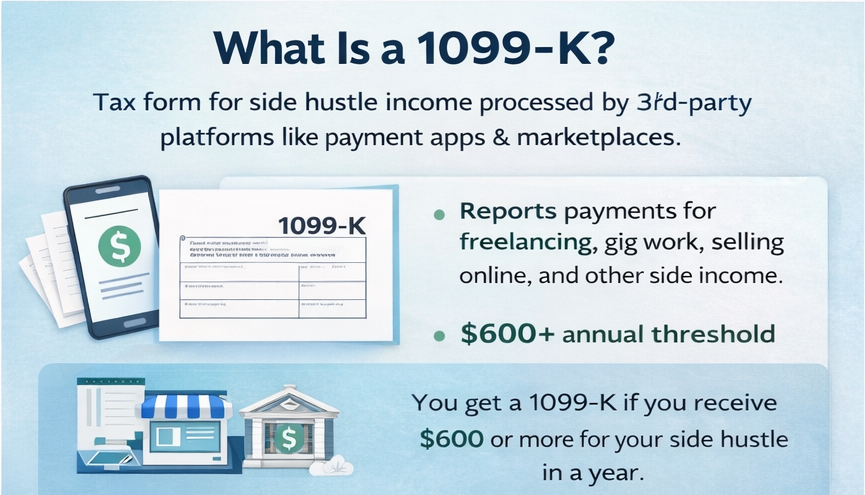
Figure 2. A simple explainer graphic showing what a 1099-K is and why side-hustle earners pay attention to it.
Do You Need to Report Side Hustle Income?
In most cases, yes. If you earned money through self-employment or freelance work, that income is generally taxable. This includes part-time work, weekend projects, app-based gigs, and reselling items for profit.
A common mistake is assuming small amounts do not count. Another is thinking that cash payments or app payments somehow stay off the radar. That mindset can cause problems later.
A better approach is to treat your side hustle like a real business from day one. Track what came in, save receipts, and separate business expenses from personal spending as much as possible.
Common Tax Deductions for Freelancers and Gig Workers
One upside of paying taxes on side income is that you may be able to deduct legitimate business expenses. The key word is legitimate. A deduction should be ordinary and necessary for your work.
| Deduction Type | How It Usually Helps |
| Home office | May apply if part of your home is used regularly and exclusively for work. |
| Internet and phone | A business-use portion of these bills may qualify when work depends on them. |
| Software and subscriptions | Scheduling tools, bookkeeping apps, design software, email platforms, and similar tools. |
| Supplies and equipment | Office supplies, packaging materials, shipping costs, or a laptop used for the business. |
| Mileage and travel | Often important for delivery drivers, client meetings, or other business activity. |
| Marketing | Website hosting, ads, branding, and promotional costs can often be written off. |
Table 1. Common deductions that side-hustle earners often review at tax time.
Why Estimated Taxes Matter
Unlike employees, freelancers and side hustlers usually do not have taxes automatically withheld from each payment. That means you may need to make estimated tax payments during the year.
If you wait until filing season and owe too much at once, you could end up with an unpleasant bill and possibly penalties. This is one of the biggest surprises for new gig workers.
A simple habit helps: set aside a percentage of every payment you receive. Many people use a separate savings account just for taxes so they do not accidentally spend that money.
The Most Common Tax Mistakes to Avoid
Side-hustle taxes usually go wrong in predictable ways. Waiting until the last minute, mixing personal and business spending, forgetting income that was not reported on a form, and guessing instead of tracking all create avoidable problems.
Ignoring quarterly tax payments is another common issue for first-year freelancers. None of these mistakes are unusual, but nearly all of them can be prevented with better records and a little planning.
A Simple Tax Checklist for Side Hustlers
Use this quick checklist before filing:
- Gather all income records.
- Check for any 1099 forms you received.
- Review bank statements and payment-app history.
- Add up business-related expenses.
- Organize receipts and mileage logs.
- Estimate what you may owe.
- File on time or request an extension if needed.
Final Thoughts
Side-hustle income can be a great way to create extra financial breathing room, but it comes with responsibilities.